 0404 631 101
Learning martial arts techniques in class is important, but knowing how to apply those techniques against a moving and responsive training partner is a completely different skill.
That is where sparring becomes valuable.
Sparring is a structured training method used in many martial arts systems to help students improve timing, distance, reactions, movement, control and confidence. When taught responsibly and progressively, it gives students an opportunity to practise techniques in a more realistic and unpredictable environment.
At Pinnacle Martial Arts Academy, sparring is approached as a learning tool rather than uncontrolled fighting. Our goal is to help students develop practical martial arts ability while maintaining safety, discipline, respect and control.
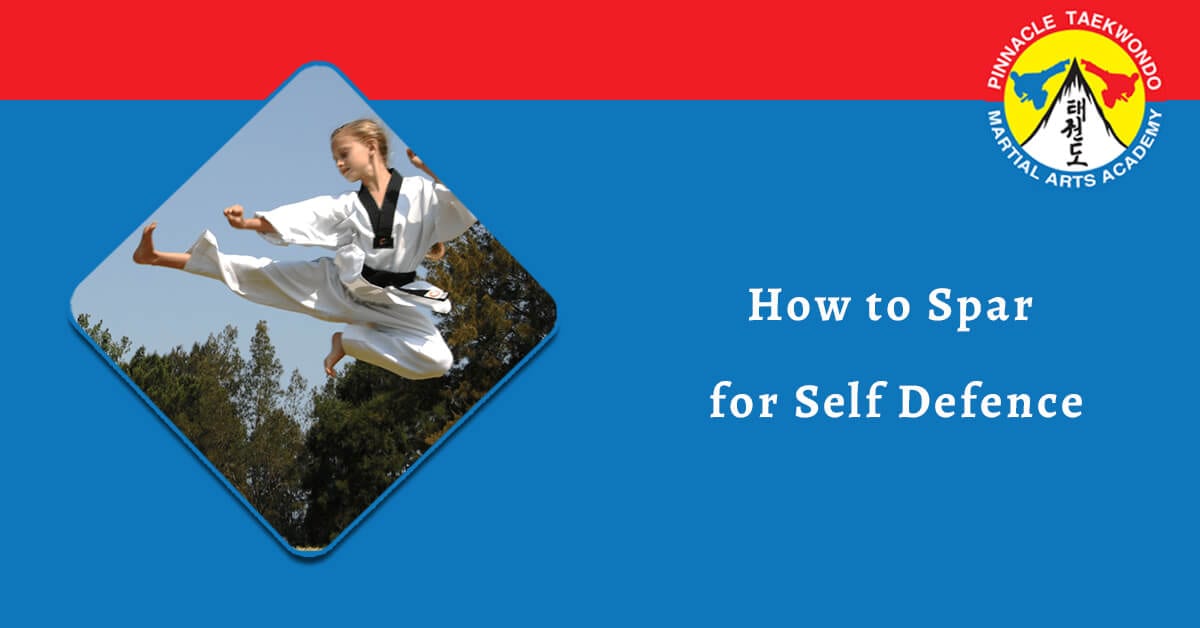
What Is Sparring in Martial Arts?
Sparring is controlled practice between two martial artists.
Rather than simply practising techniques against pads or performing movements individually, students work with a partner who moves, reacts and responds.
Depending on the student’s age, experience and ability, sparring can involve:
- Footwork
- Defensive movement
- Controlled attacks
- Blocking
- Distance management
- Timing
- Counter techniques
- Reaction drills
- Controlled combinations
The intensity should always be appropriate for the students involved.
Why Is Sparring Important?
Martial arts techniques can look completely different when another person is moving in front of you.
A technique that works perfectly during an individual drill may require adjustments when the distance changes or your partner moves unexpectedly.
Sparring helps bridge the gap between learning a technique and applying it dynamically.
1. Learn How to Apply Martial Arts Techniques
Students can practise punches, kicks, blocks and defensive movements many times during class.
However, sparring introduces movement and unpredictability.
A training partner will not necessarily remain still or react exactly as expected.
This encourages students to understand:
- When to use a technique
- How far away they should be
- How to adjust their position
- When to defend
- When to move
- How to combine techniques
This makes sparring an important part of developing practical martial arts skills.
2. Improve Timing and Distance
Timing is one of the most important skills in martial arts.
Knowing a technique is only part of the equation.
Students also need to understand when to use it.
Sparring teaches students to recognise opportunities while learning how to maintain an appropriate distance from their training partner.
Over time, students can become better at judging:
- Range
- Speed
- Timing
- Movement
- Positioning
These skills are difficult to develop through stationary drills alone.
3. Develop Better Reactions
Sparring requires students to respond to movement in real time.
Rather than knowing exactly what technique is coming next, they have to observe their partner and react.
This can improve:
- Reaction time
- Awareness
- Coordination
- Decision-making
- Defensive movement
Students gradually become more comfortable responding to changing situations.
4. Learn to Stay Calm Under Pressure
One of the biggest challenges for beginners is remaining calm when another person is moving towards them.
Even in controlled sparring, students may initially become tense or rush their techniques.
Progressive training helps them become more comfortable.
Students learn to:
- Control their breathing
- Maintain good technique
- Think before reacting
- Keep their balance
- Stay focused
Developing composure is an important part of martial arts training.
5. Build Confidence Through Experience
Confidence in martial arts should come from genuine practice.
Sparring allows students to experience what it feels like to use techniques with a responsive partner.
As students develop better timing, defence and movement, they often become more confident in their abilities.
This confidence is different from aggression.
A confident martial artist understands both their capabilities and their responsibilities.
Sparring Should Begin Gradually
Beginners should not be expected to immediately participate in fast or intense sparring.
A better approach is progressive training.
Start with One Attack and One Defence
Students may begin with a very simple exercise.
One partner performs a predetermined attack while the other practises a specific defence.
This allows both students to focus on correct technique.
Add More Techniques Gradually
Once students become comfortable, additional attacks and defensive options can be introduced.
This increases the challenge while keeping the exercise manageable.
Introduce More Movement
Students can then practise:
- Footwork
- Distance
- Angles
- Controlled combinations
This helps them become more comfortable with dynamic situations.
Increase Intensity Responsibly
As experience improves, the speed or complexity of sparring can gradually increase.
However, intensity should always remain appropriate to:
- Age
- Experience
- Skill level
- Training goals
Control should never disappear simply because training becomes faster.
Sparring Is Not About Winning Every Exchange
A common mistake is treating every sparring session like a competition.
Training partners are there to help each other improve.
The goal should be learning.
Good sparring develops:
- Technique
- Timing
- Control
- Awareness
- Movement
- Confidence
Students should leave a sparring session knowing more than when they started.
Respect for Your Training Partner Matters
Sparring requires trust.
Both students need to understand that their responsibility is to train safely while helping each other improve.
This means:
- Controlling techniques
- Following instructor directions
- Respecting agreed intensity
- Avoiding unnecessary force
- Stopping when instructed
- Communicating appropriately
A good training partner helps you become a better martial artist.
Sparring and Self-Control
One of the most valuable lessons of sparring is control.
Students learn that just because they can perform a technique does not mean they should use maximum force.
Responsible martial arts training teaches students to control:
- Power
- Speed
- Emotions
- Reactions
- Ego
This is one reason sparring can contribute to character development as well as physical skill.
How Sparring Supports Self-Defence Training
Martial Arts in Marrickville should teach students that self-defence is not about looking for opportunities to fight.
The safest approach is usually:
- Awareness
- Avoidance
- De-escalation
- Moving towards safety
- Seeking help
- Physical self-defence only when necessary
Sparring does not recreate every real-world situation, but it can help students become more comfortable with movement, distance, defensive reactions and pressure.
These skills can form one part of a broader self-defence education.
Sparring Is Different from a Real Self-Defence Situation
It is important to understand that sparring and real-world self-defence are not the same.
Sparring happens in a controlled environment with:
- Rules
- Supervision
- Training partners
- Agreed levels of contact
- Safety procedures
A real confrontation can be unpredictable.
Therefore, sparring should be viewed as one useful training tool, not a guarantee of personal safety.
Quality self-defence training should also teach awareness, avoidance and responsible decision-making.
Sparring Improves Defence
Students often focus heavily on attacking techniques.
Sparring reminds them that defence is equally important.
Students practice:
- Blocking
- Moving away
- Changing angles
- Maintaining distance
- Protecting themselves
- Responding appropriately
Good martial arts is not simply about delivering techniques.
It is also about learning how to avoid unnecessary contact and defend effectively.
Learn How to Manage Distance
Distance is critical in martial arts.
Standing too close or too far away can affect whether a technique works.
Sparring helps students learn different ranges and how to move between them.
They begin to understand when they need to:
- Step forward
- Move backwards
- Change direction
- Create space
- Close distance
This awareness improves both offensive and defensive movement.
Improve Footwork Through Sparring
Good martial arts technique starts with good movement.
Sparring encourages students to move rather than remain stationary.
Students learn how to:
- Maintain balance while moving
- Change direction
- Control distance
- Create angles
- Stay ready to respond
Strong footwork can improve almost every area of martial arts.
Sparring Helps Identify Weaknesses
Training against a responsive partner quickly reveals areas that need improvement.
A student may discover that they need to work on:
- Balance
- Guard position
- Footwork
- Timing
- Defence
- Distance
- Fitness
This feedback can make regular technical training more effective.
Instead of guessing what needs improvement, students begin to recognise it through experience.
Does Sparring Improve Fitness?
Sparring can also provide a demanding physical workout.
Students are continually moving, reacting and maintaining their technique.
This can challenge:
- Cardiovascular fitness
- Coordination
- Agility
- Endurance
- Balance
- Muscular control
Because the activity requires both physical and mental attention, it can be highly engaging.
Sparring for Kids
Sparring for children should always be:
- Age-appropriate
- Closely supervised
- Controlled
- Progressive
- Focused on learning
Kids should understand that sparring is not permission to fight outside the academy.
Instead, it is an opportunity to practise discipline, control, respect and martial arts skills with a training partner.
Sparring for Teenagers
Teenagers can use structured sparring to develop:
- Confidence
- Fitness
- Reactions
- Timing
- Discipline
- Emotional control
- Decision-making
Training also teaches them that physical ability comes with responsibility.
Sparring for Adults
Adults may find sparring particularly valuable because it challenges both physical fitness and mental focus.
It provides opportunities to improve:
- Technique
- Timing
- Movement
- Confidence
- Fitness
- Reaction skills
Beginners can start progressively rather than immediately participating in high-intensity training.
Safety Must Always Come First
Effective sparring should never become reckless.
A professional martial arts academy should provide clear rules, appropriate supervision and structured progression.
Students should follow their instructor’s guidance regarding:
- Protective equipment
- Contact levels
- Permitted techniques
- Training intensity
- Partner selection
- When to stop
Good sparring develops skill without sacrificing safety.
Self-Defence Training in Marrickville
Students interested in practical personal safety can explore Self Defence in Marrickville.
At Pinnacle Martial Arts Academy, self-defence is approached as more than learning physical techniques.
Students are encouraged to develop:
- Awareness
- Confidence
- Control
- Defensive skills
- Responsible decision-making
- Conflict avoidance
Martial Arts Training in Marrickville
Our Martial Arts in Marrickville programs provide structured training for kids, teens and adults of different experience levels.
Students can develop martial arts skills while working towards greater:
- Fitness
- Confidence
- Discipline
- Focus
- Coordination
- Self-control
- Self-defence awareness
Martial Arts Training in Chester Hill
Pinnacle Martial Arts also provides comprehensive training for families in Chester Hill and surrounding South West Sydney areas.
Our programs are designed to help beginners develop strong foundations while giving experienced students opportunities to continue improving.
Why Choose Pinnacle Martial Arts Academy?
At Pinnacle Martial Arts Academy, we believe effective training should combine technique, discipline, fitness and responsible martial arts development.
Our programs focus on:
- Controlled sparring
- Martial arts technique
- Self-defence awareness
- Fitness
- Confidence
- Discipline
- Coordination
- Respect
- Focus
- Character development
Students are encouraged to challenge themselves while respecting their training partners and learning in a structured environment.
Turn Technique Into Practical Martial Arts Skill
Practicing techniques is essential.
Learning how to use them while another person moves, reacts and responds adds another important dimension to martial arts training.
That is why controlled, progressive sparring can be such a valuable learning tool.
It helps students understand timing, distance, defence, movement and composure while building confidence through genuine experience.
Start Martial Arts and Self-Defence Training Today
If you are looking for comprehensive martial arts training that develops more than kicks and punches, Pinnacle Martial Arts Academy can help.
Our training centers in Marrickville and Chester Hill provide structured martial arts and self-defence programs for kids, teens and adults.
Learn the technique. Test your timing. Develop control. Build confidence.
Start training with Pinnacle Martial Arts Academy today and work towards reaching your Pinnacle.
Pinnacle Martial Arts & Self Defence in Marrickville Inner West Sydney is ideal for Fitness, Discipline, Self Defence, Character & Physical Development
At Pinnacle in Marrickville Inner West and Chester Hill Bankstown Area South West Sydney, we have incorporated many disciplines and integrated the dynamics of Sports Taekwondo, Kung Fu, Korean Karate, Traditional Taekwondo, Hapkido, Boxing, Kick Boxing and fitness to provide the most practical and effective Martial Arts self defence techniques for kids, teens and adults.
We have adopted these disciplines to complement each other thus creating the fast, powerful, exciting and dynamic Pinnacle style. Pinnacle Martial Arts Taekwondo Academy designed popular programs to suit the specific ages and levels of our members.
You can visit our popular Pinnacle Martial Arts branch in Marrickville Inner West Sydney at:
23 Yabsley Ave, Marrickville NSW 2204
You can visit our popular Pinnacle Martial Arts branch in Chester Hill, Bankstown Area South West Sydney at:
12 Banool St, Chester Hill NSW 2162
or Contact us on 0410 686 585
Website: pinnaclemartialarts.com.au
Email: info@pinnaclemartialarts.com.au
Facebook: www.facebook.com/sydneypinnaclema
Instagram: www.instagram.com/pinnaclemartialartssydney
🥇 Sign Up for the Best Martial Arts in Marrickville Inner West Sydney
Convenient Sydney Locations for Pinnacle Taekwondo Martial Arts Near Me
📍 Pinnacle Karate Martial Arts Marrickville (Headquarters) 23 Yabsley Ave, Marrickville, Inner West Sydney
📍 Pinnacle Taekwondo Martial Arts in Chester Hill 12 Banool St, Chester Hill, Bankstown Area, Southwest Sydney
📍 Pinnacle Taekwondo Martial Arts in Penrith Penrith Baptist Church, Morello Terrace, Caddens, Western Sydney
📍 Pinnacle Karate Martial Arts in Earlwood (Canterbury Bankstown Area) Martial Arts, Fitness, and Karate Self-Defence Programs Across Sydney
#Taekwondo #TaekwondoSydney #MartialArtsSydney #Karate #SelfDefence #MartialArts #ConfidenceBoost #MartialArtsMarrickville