 0404 631 101
Even the most experienced martial artist can feel nervous before a competition, grading or important performance.
A certain level of nervousness is completely normal. In fact, it can sometimes help students become more alert and focused.
However, when anxiety becomes strong enough to affect concentration, confidence or performance, it can become what is commonly known as competitive anxiety.
At Pinnacle Martial Arts Marrickville, we understand that martial arts training is not only about developing physical skills. It is also about learning how to manage pressure, stay focused and trust your preparation.
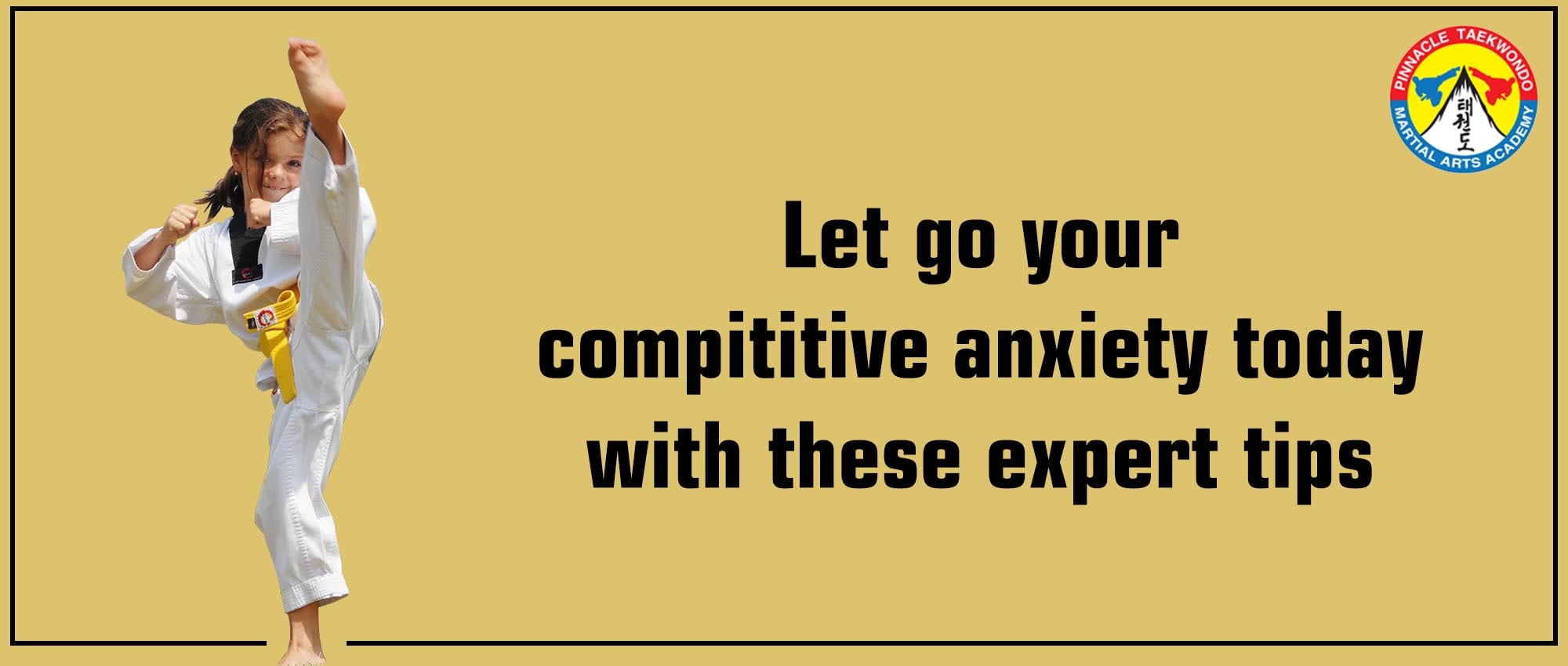
Why Do Martial Artists Feel Nervous Before Competition?
Anxiety can develop for many reasons.
A student may worry about:
- Making a mistake
- Losing
- Disappointing an instructor
- Performing in front of others
- Facing a more experienced opponent
- Forgetting techniques
- Not meeting personal expectations
Sometimes the pressure comes from outside.
Other times, the strongest pressure comes from the expectations students place on themselves.
At Pinnacle Martial Arts in Marrickville, students are encouraged to understand that nervousness does not automatically mean they are unprepared.
It simply means the situation matters to them.
Confidence Comes From Preparation
One of the strongest ways to approach competition with greater confidence is to prepare consistently.
Confidence is easier to build when you know you have:
- Attended training
- Practiced your techniques
- Worked on fitness
- Listened to feedback
- Improved weaknesses
- Prepared mentally
You cannot control everything that happens during competition.
But you can control how well you prepare.
1. Build Positive and Realistic Self-Belief
Positive thinking does not mean convincing yourself that you will definitely win.
A stronger approach is realistic confidence.
Instead of thinking:
“I have to win.”
Try:
“I have prepared well, and I am going to give my best performance.”
Instead of:
“What if I make a mistake?”
Try:
“If I make a mistake, I can reset and keep going.”
This type of thinking can reduce unnecessary pressure while helping students remain focused.
Challenge Negative Self-Talk
Pay attention to what you say to yourself before competition.
Thoughts such as:
- “I am not good enough.”
- “Everyone else is better.”
- “I am going to fail.”
- “I cannot handle this.”
can increase anxiety.
Try replacing them with more useful thoughts:
“I know my training.”
“I can control my effort.”
“I will focus on one moment at a time.”
“I do not need to be perfect.”
These statements are simple, but repeating them can help create a more constructive mindset.
2. Use Relaxation and Breathing Techniques
When people become anxious, their breathing may become faster and their muscles can become tense.
Simple breathing techniques can help create a sense of control.
Before competition, try:
- Breathing in slowly
- Breathing out gradually
- Relaxing your shoulders
- Releasing unnecessary tension
- Bringing attention back to the present moment
The goal is not to eliminate every nervous feeling.
It is to stop nervousness from taking over your concentration.
A Calm Mind Supports Better Decisions
Martial arts requires quick thinking.
During competition, students need to pay attention to:
- Distance
- Timing
- Footwork
- Balance
- Technique
- Their opponent
- Opportunities to attack or defend
When the mind becomes overloaded with worry, it can become harder to focus on these details.
Relaxation techniques can help students return attention to what is happening in front of them.
3. Watch Your Thoughts Before You Compete
Thoughts can quickly influence emotions.
If you constantly imagine everything that might go wrong, anxiety can increase before you even step onto the training area.
Instead, focus your attention on useful information.
Ask yourself:
- What is my game plan?
- What do I need to remember?
- What technique have I practiced well?
- What can I control right now?
At Pinnacle Martial Arts Marrickville, students are encouraged to focus on preparation and execution rather than unnecessary fear about the final result.
Visualize Yourself Performing With Control
Mental rehearsal can also be useful.
Before your performance, imagine yourself:
- Entering calmly
- Maintaining good stance
- Breathing steadily
- Executing techniques with control
- Recovering after mistakes
- Staying focused until the end
Visualization should be realistic.
Do not imagine a perfect performance where nothing goes wrong.
Imagine yourself responding well even if something unexpected happens.
That builds adaptability as well as confidence.
4. Use Healthy Distraction When Anxiety Builds
Sometimes a student has prepared well but still becomes increasingly nervous while waiting to compete.
In this situation, constantly thinking about the competition may make anxiety worse.
A short mental break can help.
You might:
- Listen to music
- Talk to a supportive teammate
- Read something
- Take a short walk
- Focus on breathing
- Watch something relaxing
The idea is not to completely avoid the competition.
It is simply to prevent your mind from repeatedly feeding the same anxious thoughts.
Find What Helps You Reset
Different people relax in different ways.
One student may prefer quiet breathing.
Another may feel better talking to a teammate.
Someone else may prefer stretching or listening to music.
The important thing is finding a healthy routine that helps you return to a focused state.
5. Focus on What You Can Control
This is one of the most important lessons in competitive martial arts.
You cannot control:
- Your opponent’s ability
- The crowd
- Every referee decision
- Unexpected mistakes
- The final outcome
You can control:
- Your preparation
- Your effort
- Your attitude
- Your breathing
- Your technique
- Your response to mistakes
At Pinnacle Martial Arts in Marrickville, students are encouraged to place their energy into the things they can actually influence.
Stop Obsessing Over the Result
It is natural to want to win.
However, focusing only on winning can increase pressure.
A better performance goal might be:
Maintain my guard.
Move confidently.
Stay composed.
Use the techniques I have practiced.
Give full effort until the end.
These are measurable goals that remain within your control.
Winning may be the outcome you want, but performing well should remain the priority.
6. Prepare for Competition the Same Way You Train
Competition should not feel like an entirely different activity.
The more students can recreate competition situations during training, the more familiar the experience may become.
Training may include:
- Controlled sparring
- Timed rounds
- Practice demonstrations
- Mock gradings
- Competition-style drills
Familiarity can reduce uncertainty.
When students know what to expect, they can direct more attention towards performance rather than fear.
7. Accept That Nervousness Is Normal
Trying desperately to eliminate every sign of anxiety can sometimes make it stronger.
Instead, recognize it.
You might tell yourself:
“I am nervous because this matters to me.”
Then return your attention to the next action.
Some nervousness does not mean you will perform badly.
Many experienced athletes still feel nervous before competition.
The difference is that they learn how to perform despite those feelings.
8. Do Not Let One Mistake Control the Rest of Your Performance
Mistakes happen.
You might lose your balance.
A technique may not land.
Your opponent may surprise you.
A grading sequence may not go exactly as planned.
The important skill is recovering quickly.
Instead of thinking:
“I ruined everything.”
Think:
“Reset. Next movement.”
Martial arts teaches students that one mistake does not need to become several mistakes.
9. Build Confidence Through Consistent Training
Confidence is rarely created by motivational words alone.
It comes from experience.
Every time you:
- Complete a difficult session
- Learn a new skill
- Improve your fitness
- Perform under pressure
- Recover from a mistake
you build evidence that you can handle challenges.
This is one of the reasons consistent martial arts training can be so valuable.
Competition Can Become a Learning Opportunity
Competition should not be viewed only as winning or losing.
It can reveal:
- Strong techniques
- Weak areas
- Fitness levels
- Decision-making habits
- Emotional reactions
- Areas requiring more practice
After competition, ask:
What went well?
What needs improvement?
What will I work on next?
This turns competition into another stage of development.
How Martial Arts Can Build Mental Resilience
Martial arts repeatedly places students in manageable challenging situations.
They may feel nervous.
They may struggle.
They may make mistakes.
Then they learn how to continue.
Over time, this can support qualities such as:
- Confidence
- Discipline
- Patience
- Focus
- Emotional control
- Resilience
These qualities can also become useful in school, work and other areas of life.
When Competitive Anxiety Needs Extra Support
Occasional nervousness before a competition is common.
However, if anxiety becomes severe, persistent or begins interfering significantly with daily life, sleep, school, work or normal activities, additional professional support may be useful.
A qualified health professional can help identify appropriate strategies.
Martial arts can support confidence and resilience, but it should not be presented as a replacement for professional mental health care when that is needed.
Train Your Mind as Well as Your Body
Physical preparation is only one part of competitive martial arts.
Students also need to develop:
- Focus
- Confidence
- Emotional control
- Patience
- Adaptability
The strongest performer is not always the person who feels no anxiety.
Often, it is the person who has learned how to remain effective even while feeling nervous.
Overcome Competitive Anxiety at Pinnacle Martial Arts Marrickville
At Pinnacle Martial Arts Marrickville, students can develop their martial arts skills while also learning how to manage pressure, build confidence and stay focused during challenging situations.
Training can help students prepare for:
- Gradings
- Sparring
- Competition
- Demonstrations
- Personal challenges
Through consistent practice, students can learn to trust their preparation and focus on what they can control.
Build Confidence Through Preparation
Competitive anxiety does not have to control your performance.
Prepare well.
Breathe.
Watch your thoughts.
Stay focused.
Accept that mistakes can happen.
Concentrate on your own technique rather than worrying about everything around you.
Whether you train at Pinnacle Martial Arts Marrickville or Martial Arts Chester Hill, the goal is the same:
Prepare with discipline. Compete with focus. Trust your training. Learn from every experience.
Pinnacle Martial Arts in Marrickville is a popular combination of The Martial Art of Taekwondo, Japanese Karate, Sports Taekwondo, Korean Karate, Boxing/Kickboxing methods, Hapkido, Kung Fu, Martial Arts Self Defence and Fitness. Pinnacle Martial Arts in Chester Hill is Suitable for kids, teens, and adults of all ages and levels.
Contact us on 0410 686 585
Book A Free Class: https://pinnaclemartialarts.com.au/book-free-martial-arts-classes/
Website: pinnaclemartialarts.com.au
Email: info@pinnaclemartialarts.com.au
Facebook: www.facebook.com/sydneypinnaclema
Instagram: www.instagram.com/pinnaclemartialartssydney
Sign Up for the Best Martial Arts in Marrickville Inner West Sydney
Convenient Sydney Locations for Pinnacle Taekwondo Martial Arts Near Me
📍 Pinnacle Karate Martial Arts Marrickville (Headquarters) 23 Yabsley Ave, Marrickville, Inner West Sydney
📍 Pinnacle Taekwondo Martial Arts in Chester Hill 12 Banool St, Chester Hill, Bankstown Area, Southwest Sydney
📍 Pinnacle Taekwondo Martial Arts in Penrith Penrith Baptist Church, Morello Terrace, Caddens, Western Sydney
📍 Pinnacle Karate Martial Arts in Earlwood (Canterbury Bankstown Area) Martial Arts, Fitness, and Karate Self-Defence Programs Across Sydney
#Taekwondo #TaekwondoSydney #MartialArtsSydney #Karate #SelfDefence #MartialArts #ConfidenceBoost #MartialArtsMarrickville